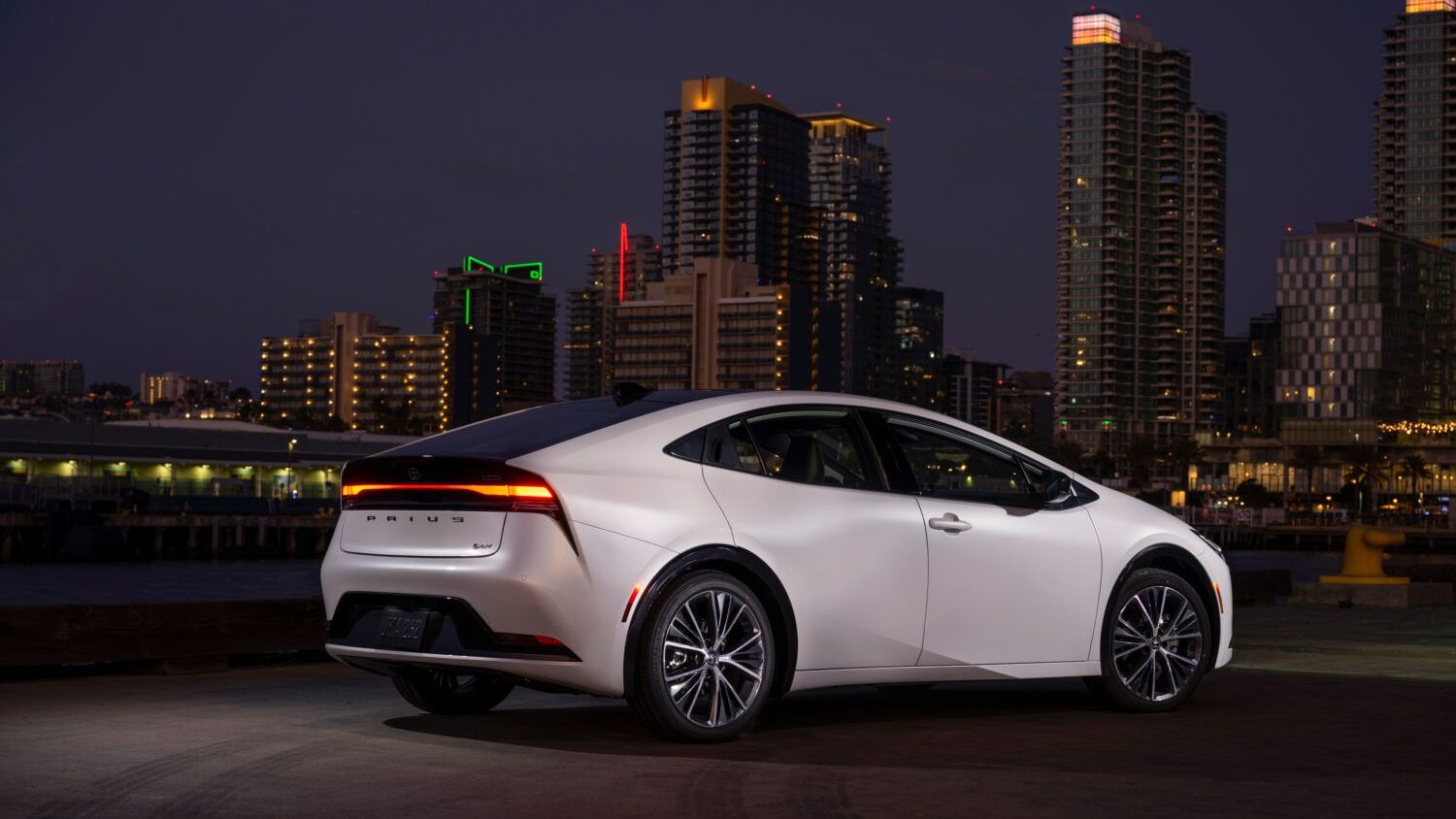
With 32 Prius taxis operating in his Cairns, Queensland fleet of Black and White Taxis, owner Graham Boundy knows the truth about high-mileage hybrids - and it's surprisingly good. Each car racks up about 200,000km (125,000mi) each year. Two of the older examples have managed a lifespan of 350,000km (218,000mi) and 550,000km (341,000mi) before needing replacement of their nickel-metal hydride (NiMH) batteries. The only problem even at the end of their battery pack service life was a low voltage reading.The cars have been in service since September, 2005, and Bounds has ordered another 8 to bring his fleet total to 40.
According to Toyota Australia's manager of hybrid sales and fleet strategy Vic Johnston, the use seen in the highest-mileage car during those three years equates to roughly 36 years of normal road use. The math works out a bit differently across the pond in the U.S., with a 15,000mi per year average equating to roughly 16 years of use. Still, that's impressive for a hybrid, and in fact equal to or better than a person might expect of trouble-free service from a similarly priced standard combustion-powered car's engine.

Have an opinion?
Gigadomed Posted: 7/23/2008 3:25pm PDT
Gus Posted: 7/23/2008 4:10pm PDT
While I don't readily agree with the Hybrid concept and it's inherent complexity and added cost, I applaud Toyota for building the car people want at a time they want it.
bc Posted: 7/23/2008 4:45pm PDT
SuperSkyline89 Posted: 7/23/2008 5:05pm PDT
Quincy Posted: 7/23/2008 11:21pm PDT
Actually, the Prius is very simple mechanically. The transmission for instance has just 22 moving parts, no torque converter, no clutch, no CVT belts. The engine has no timing belt (everything is controlled electronically), no alternator or starter solenoid to wear out.
The complexity of the Prius is in its computers and electronics. And solid-state things with no moving parts tends to have longevity (as long as the electronics are built using high-quality components).
The mechanical simplicity of the Prius is one of the reasons why it actually costs LESS to maintain than a normal car.
Ayax Posted: 7/24/2008 1:13am PDT
worldbfree4me Posted: 7/24/2008 7:21am PDT
Gordy Posted: 7/24/2008 9:14am PDT
This story begs the question, What does it cost to replace the batteries?
CarFan Posted: 7/24/2008 9:29am PDT
This can hardly be called an apples to apples comparison.
Doug Posted: 7/24/2008 11:49am PDT
"Two of the older examples have managed a lifespan of 350,000km (218,000mi) and 550,000km (341,000mi) before needing replacement of their nickel-metal hydride (NiMH) batteries."
Exactly where did you read that 340k mi was the sum of both hybrids? From what I read there, one Prius got 218,000 while the other got to 341,000 mi before needing replacement, I don't see anywhere in article that it's the sum total of both the hybrids hence the headline is true.
Hybrid Posted: 7/25/2008 12:21am PDT
The Prius is not designed to satisfy everyone's needs. You just need to be rational when evaluating a hybrid to ensure it meets your needs. It is without a doubt a highly reliable car. With high fuel prices and if you're a regular traveller, owns at least a midsize car, the Prius does make a lot of financial sense as well as environmental sense.
It's a 2001 and we're told it was commissioned in March so our 8 years is up on the warranty, and the mileage on this battery pack is 98,000 miles.
I hope others who have had battery failure will speak up, so we can get some updated info on life expectancy.
Have an opinion?Join the conversation!