In what has become an all too common scenario, yet another eBay sports car buyer has met with a dealer's refusal to sell a car bought in a no-reserve auction. The matter is more complex than it might seem--or than some might make it out to be--and we have the inside story, from both the buyer and the dealership.
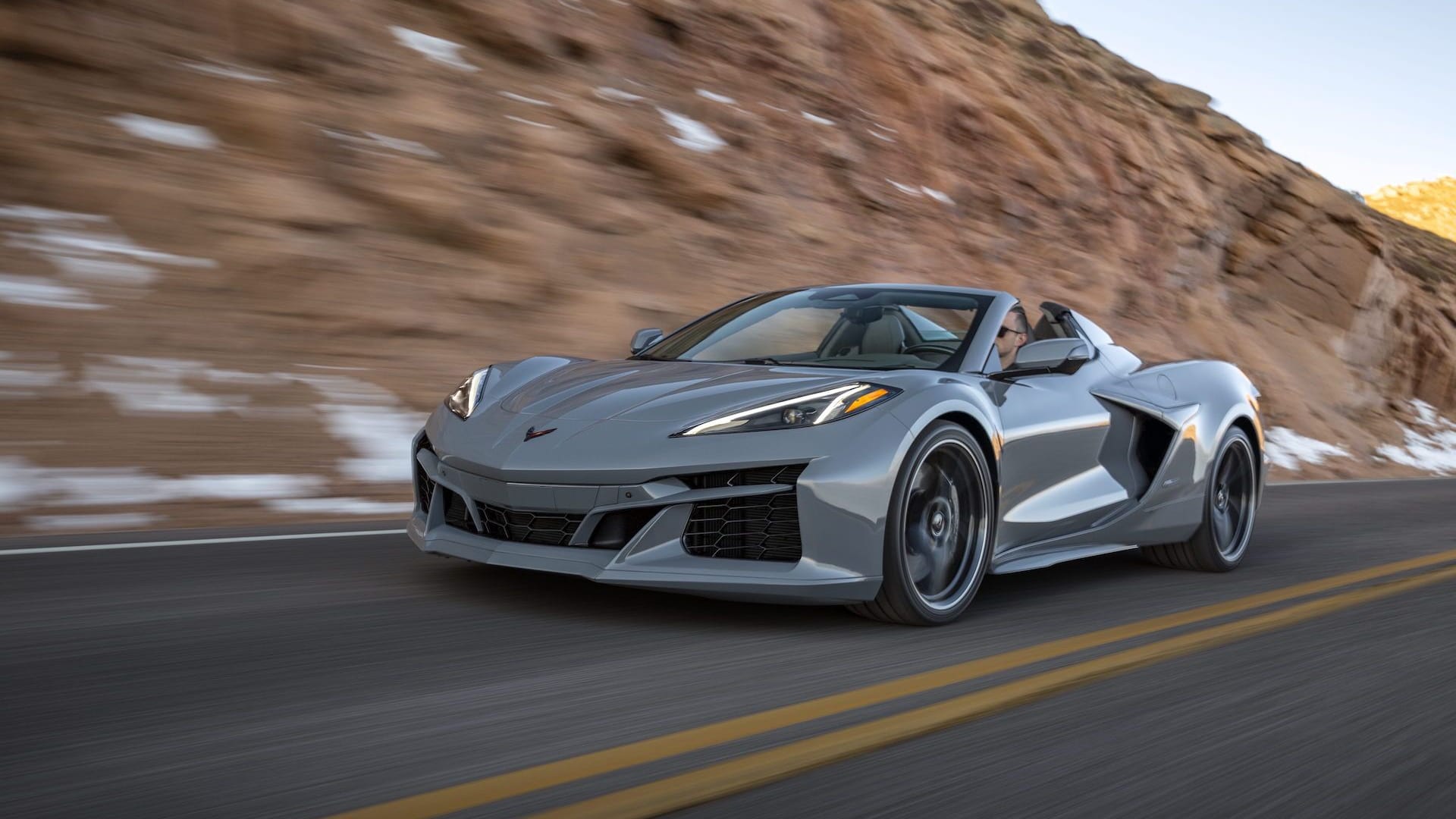
First, the situation, as related to Motor Authority by the buyer, John McKee: a 2009 Chevrolet Corvette Z06 (note: link is to closed eBay auction, which will disappear eventually) with the 3LZ package and the GT1 Championship package was offered for sale on eBay by Lund Cadillac, a Phoenix, Arizona dealership. The car was listed with no reserve price. When the auction's time was up, McKee was on top at a price of $56,600. But when McKee called to pay his winning price, the dealership refused.
Not just another case of buyer-done-wrong
After at least two phone calls, sales manager Matt Kinder told McKee the Corvette would cost him at least $69,500--they wouldn't let go of it for less. McKee, however, had done his homework, and knew the car had been purchased by the dealership at an auction in Orlando for just over $60,000, and refused to pay the inflated asking price.
So far, so well--just another case of an eBay buyer bilked by a dealership, right? Actually, it's not so simple. In fact, it's rather complex, thanks to the laws that govern such transactions.
Arizona, like many other states, has a statute that presumes all auctions for the sale of goods (i.e. cars) are with reserve unless explicitly stated to be without reserve. Though the eBay listing had no reserve price set, neither was there an explicit statement that the auction was without reserve, either in the title or the item description itself.
Score one for the dealership, then--as even eBay itself notes, bids for vehicles are non-binding, unlike other types of eBay auctions. A bid on a car essentially amounts to a buyer's statement of interest in purchasing a vehicle, rather than a legal commitment to do so. Why? As eBay puts it in its help pages, "Due to state laws and the complexities of real estate and vehicle transactions, bids in those categories are non-binding."
So McKee appears to be back at square one--the eBay listing and bidding process having served as nothing more than an elaborate classified ad so far. But there's another hitch in the law, brought about by the dealership's response to McKee's "winning" bid.
But should the dealership be held to its word?It's part of contract law, called "offer and acceptance." It sounds simple, and on its face, it is: a buyer makes an offer to buy something, the seller has the choice to accept the offer or not. If the offer is accepted, the contract is formed, and the seller is obligated to sell the item for the price agreed. In practice, it can be much more complicated than that, but that's the general idea.
Here, McKee's winning bid amounts to an offer to buy the Corvette for $56,600. But did the dealership accept that offer? Perhaps. In response to the close of the auction, the dealership sent an email to McKee, stating in part, "Congratulations on the purchase of your 2009 Chevrolet Corvette!"
That sure sounds a lot like an acceptance of the offer and the formation of an agreement, or contract, to sell the car. The law requires (depending on the circumstsances and jurisdiction, of course, but generally speaking) only objective manifestation of assent, i.e. the email in question, which congratulates McKee on his purchase and instructs him to fill out various forms and paperwork to complete the transaction.
So, on the face of things, we have a contract to sell this car to McKee for the price offered--$56,600. How does the dealership explain its insistence on an additional $12,900 on top of the agreed-upon price?
Sales manager Matt Kinder explains that it's simply a mistake. The car was listed through eCarList, a dealer inventory management service, and either eCarList or the salesman responsible for the Corvette, Jeff Beacham, omitted the reserve price. Kinder says McKee is aware the sale is a mistake, and that, "We're not obligated to sell it at that price." Kinder also notes that this is the first time Lund Cadillac has had an auction go wrong in this fashion.
"McKee knew the car was well below market value. He knew a mistake was made, " Kinder told Motor Authority. "He's trying to take advantage of the situation."
What's the car really worth?The advantage would be a price something like $5,000-$7,000 below the dealer's cost to purchase the car at auction and recondition it, including fitting a new set of tires, according to Kinder. Anyone familiar with the car dealership business knows that 10 percent of a car's price is a big hit to take, especially when it's the result of a mistake, rather than overpaying for the car in the first place or any problem with the car itself. But is that the case here?
Kinder added, "We have tried to offer the car to McKee at a price below market value." Was the $69,500 price that below-market offer?
The retail market value of a 6,500-mile 2009 Corvette Z06 in "excellent" condition, according to Kelley Blue Book, is $55,714--$886 than McKee's winning bid. NADA Guides comes in below that at just over $54,000. Of course, neither takes into account the GT1 Championship Edition package or the upgraded 3LZ equipment, so expect to tack a bit more onto that price. Still, it frames McKee's bid as not entirely outrageous. Kinder didn't disclose the exact "below market value" price Lund offered McKee, so perhaps the $69,500 amount wasn't the lowest one on the table.
Considering the price of a new 2012 Z06 starts at $75,525, the dealership's offer, as related by McKee, of $69,500, seems a bit high. It certainly seems above the value of a three-year-old car, even if it does have just 6,522 miles on it.
Lund Cadillac is working with eCarList and eBay to get a retraction of the auction due to the error in listing the car without reserve. Kinder did not disclose what the reserve price would have been set at, nor the exact price paid by Lund for the car.
Buyer beware--and seller too
The bottom line here: be wary of any deal that seems too good to be true, and in particular, of great deals on cars sold without reserve on eBay by dealers. It may end up being more headache than bargain, even if you do get the car for the price bid. The laws are not clear-cut, both sides have money to lose, and it's not always as simple as it seems. If, on the other hand, you're selling a car on eBay, be careful about how you list the car. It could come back to bite you, or at least cause more trouble than the profit you might make is worth.
That said, we put the matter to you, the enthusiasts, and ask which side you think is in the right in this case. Given what we know so far, should Lund sell the Corvette for the winning bid price of $56,600? Or should the dealer be allowed to fix its mistake and avoid taking a loss--as it claims--on a car that could reasonably be valued above the eBay auction price? Let us know in the comments below.