
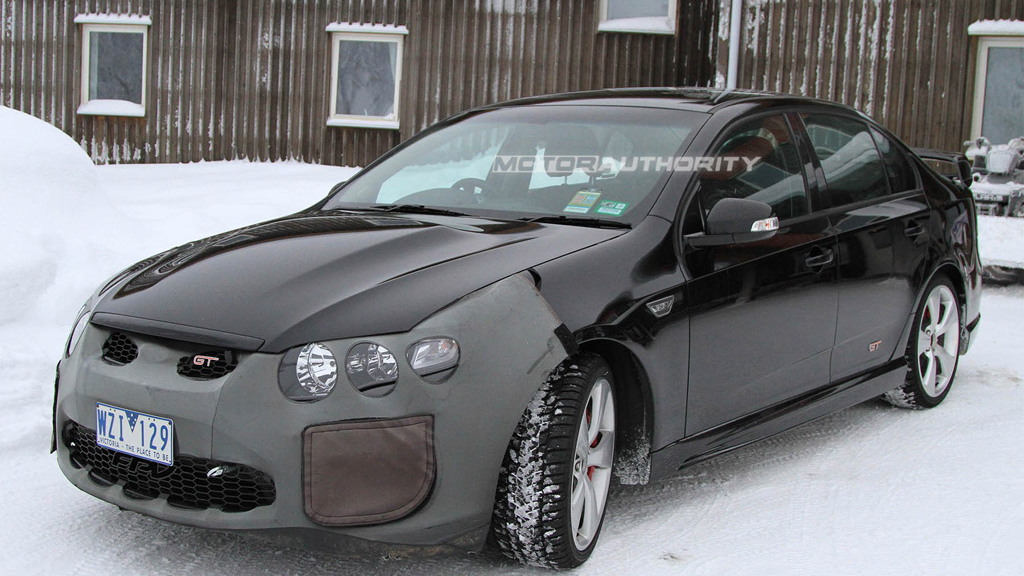
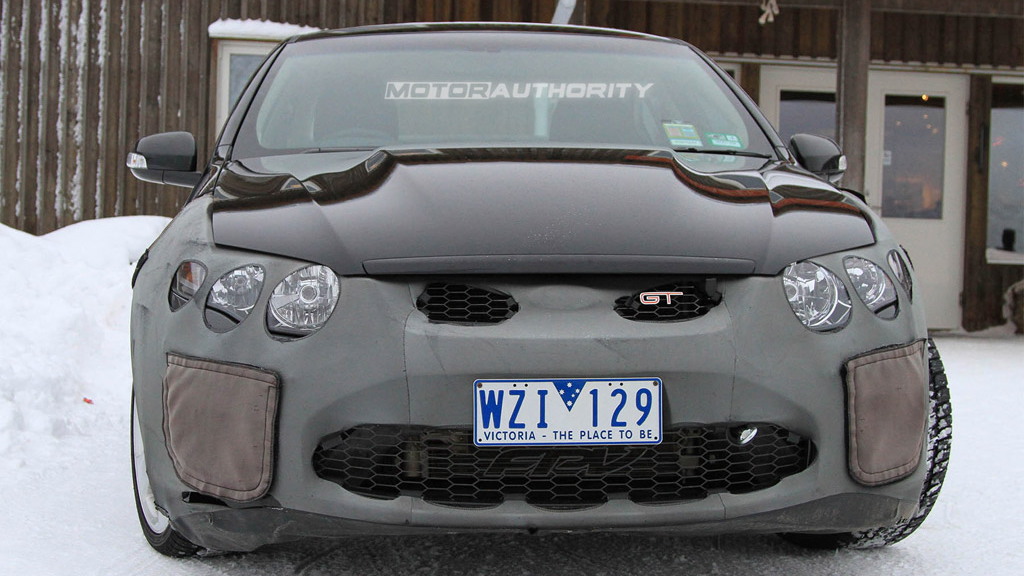
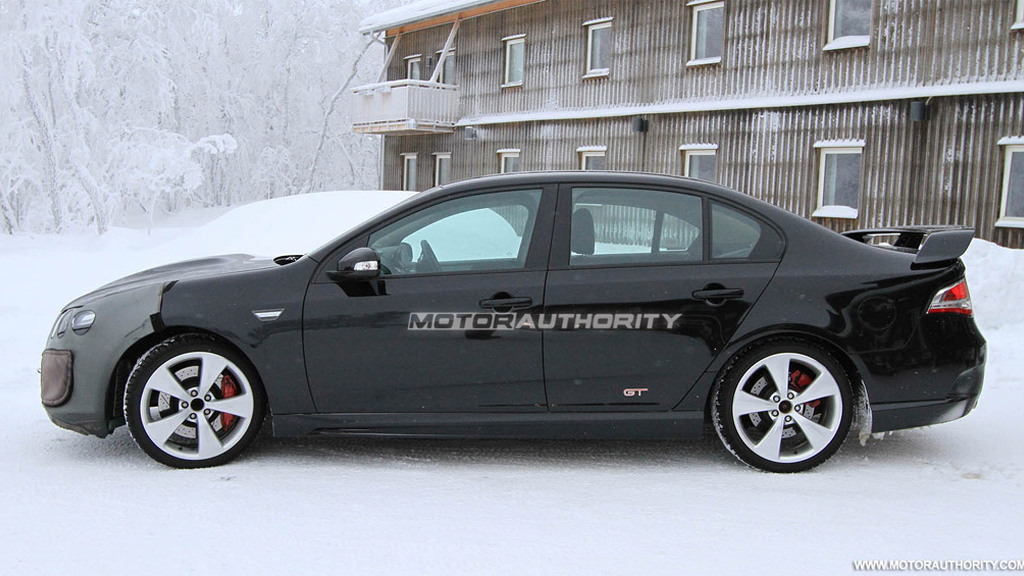
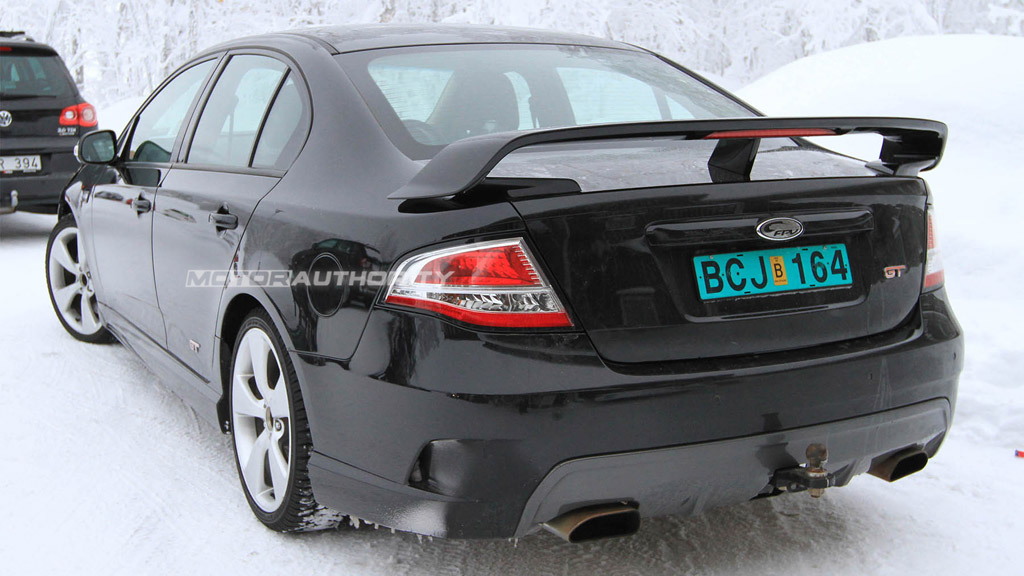
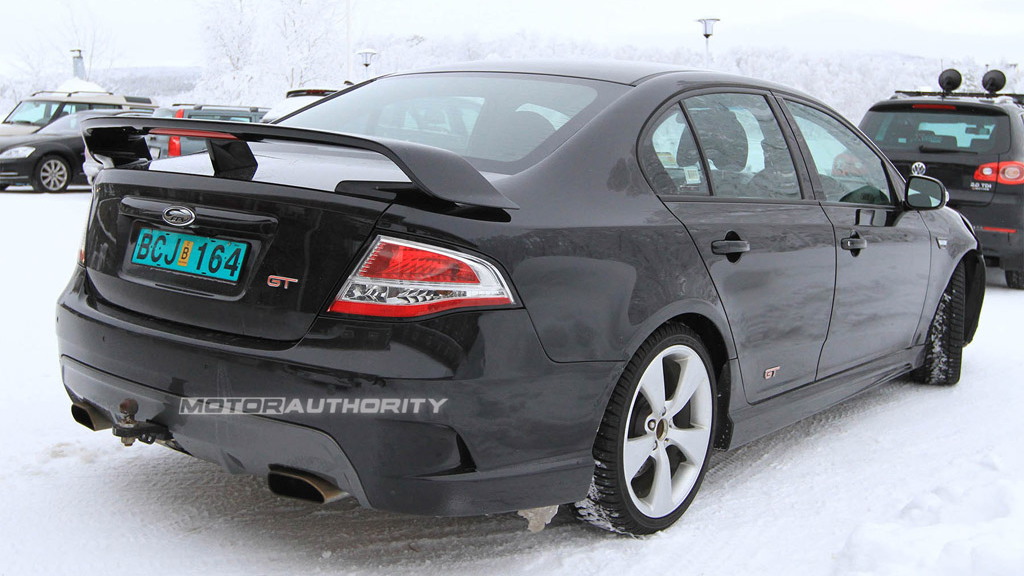
Ford Falcon FPV GT-H spy shots
When
Ford Performance Vehicles (FPV), the official in-house tuner for Ford’s Australian division, first announced plans for a supercharged version of the 5.0-liter Coyote V-8 found in the Mustang GT, thoughts of 500 horsepower monsters with mountains of torque filled the imaginations of Blue Oval enthusiasts the world over.
Unfortunately, when the final product came out last year in the
Ford Falcon FPV GT, GT-E and GT-P sedans (pictured below), the supercharged Coyote’s 450 horsepower output was nothing short of a major letdown.
It now appears that was because FPV was reserving a more potent form of its new blown V-8 for a very special model, the long-rumored GT-H. Billed as the spiritual successor to the legendary GT-HO Ford Falcons of the 1970s, the new GT-H is expected to feature the same supercharged Coyote V-8 but with the addition of an intercooler system.
Prototypes of a FPV Falcon GT has been spotted undergoing cold-weather testing, and this one has a pair of small intercoolers located on either side of its front bumper, a spot normally reserved for fog lights.
The addition of an intercooler system should allow engineers to dial up more boost from the supercharger system, which should in turn increase power levels to possibly around the 500 horsepower mark.
If built, a debut at the 2011 Melbourne Motor Show this July is highly likely.
The good news for readers back in the U.S. is that FPV has hinted in the past about
exporting its supercharger technology, which cost close to $40 million to develop together with motorsport and engineering group Prodrive. Perhaps one day we could see the kit as an OEM option for Ford’s performance models here in the States.
Have an opinion?Join the conversation!
By Wayne Posted: 1/24/2011 9:11pm PST
Viknesh, with respect what drugs are you on?? Letdown??? Have you driven one??????
By NoNameDenton Posted: 1/24/2011 9:26pm PST
Of course, 450 horsepower in a rear-wheel drive sedan is nothing to scoff at.
Nevertheless, the final output of 450 horsepower is only 38 horsepower more than the naturally aspirated version of the engine sold in the Mustang GT. With the added weight and complexity of the supercharger system, plus the $40 million development cost, I’m sure most would agree that there could have been substantially more power produced.
By dan aka chevyman Posted: 1/25/2011 5:32am PST
By Wayne Posted: 1/25/2011 3:56pm PST
Pretty naive comments from you, and a poor understanding of the current market place.
By David Posted: 1/25/2011 4:23pm PST
You have to remember, when the first supercharged FPV models were launched last year, the GT-H was just a distant rumor so for all we knew, BACK THEN, 450 horsepower was the upper limit for the current crop of FPV models, which in my opinion is a major letdown for a supercharged 5.0-liter V-8 (especially when the naturally aspirated model is already pumping out 412 horsepower).
Now, if you are ASSUMING that FPV was always planning a mega GT-H model with 500 horsepower, then of course, the incremental power upgrades for the lesser GT models is a good idea, but you are using a model that doesn’t even exist to support your argument.
The crux of my point was that 450 horsepower from a supercharged 5.0-liter V-8 that already produces 412 horsepower in naturally aspirated form is a major letdown, not the car itself.
By RB Posted: 1/25/2011 5:43pm PST
By David Posted: 1/25/2011 6:49pm PST
By paulb Posted: 1/25/2011 7:02pm PST
The blown v8 currently available in FPV does not have the same ECU as the Mustang and cannot utilise the camshaft variability profiles (4) the Mustang does. So you start before the supercharging with a lower output than the Mustang spec Coyote motor.
Now, moving on. FPV upgrade the ECU (or rather Ford does across the range) at some future date, perhaps next update of Falcon model, full variable camshaft profiles feature is enabled (power upgrade). Then intercoolers are added (more power) without amending boost pressure. Increase boost pressure and we wait and see what the power output brings.
Of course, Mustang is 300lb lighter than FPV Falcon so performance of the FPV Falcon compared with the Mustang with the same spec motor will always favour Mustang. Falcon isn't on Fox platform and has Independent Rear suspension that Mustang doesn't.
Apples and Oranges basically, either way future sounds good for both Mustang and FPV...
By Wayne Posted: 1/25/2011 8:22pm PST
By Robert Ryan Posted: 1/25/2011 9:13pm PST
By nik Posted: 2/7/2011 3:10am PST
The Fpv is running low boost and the main aim of FPV was to have good drivability & ingear acceleration.
You are comparing peak power of both cars, not looking at drivability and spread of power and torque across the rev range.
Wheres the mustang needs to rev alot to make peak torque, the fpv will do that at only 2200rpm... all the way to 6000rpm
When comparing cars , theres more to the story than just looking at peak power figures
Have an opinion?Join the conversation!