

Audi U.S. CEO De Nysschen: U.S. Government 'In Love' With EVs

 
Follow Nelson

Johan de Nysschen

Johan de Nysschen

Johan de Nysschen

Enlarge Photo

Audi of America's CEO Johan de Nysschen is not known for mincing words, infamously calling the 2011 Chevrolet Volt "a car for idiots" just a few months ago. It seems the media storm didn't scare de Nysschen, as he's back at it again, this time saying the U.S. government has "fallen in love" with EVs, and that this irrational viewpoint is impeding more cost-effective progress on fuel efficiency.

As usual, de Nysschen is quick to ground his polemic statements in facts and figures, pointing out that the price premium of the Volt, or other similar primarily electric-powered cars can't be offset through fuel use--the expense is immense even in comparison to $4/gallon fuel budgets. Instead, costly taxpayer subsidies have to be used to make the cars affordable to the average consumer.

Tossing around even more inflammatory language, de Nysschen says that while he understands the seduction of hybrids and electrics for politicians, the newly minted relationship "shouldn't be a monogamous" one. Instead the open market, free of such government interference, is a better way to pick the technology of the future. While that may be, de Nysschen offers no alternative mechanism for bringing about the change sought by the U.S. government.

Critics of de Nysschen's free-market viewpoint are quick to point out that it is precisely this sort of government subsidy that will allow the next generation of technologies to be developed before the climate or pollution situations get so bad that the market is driven to respond. De Nysschen's only response is that such a model is simply not sustainable.

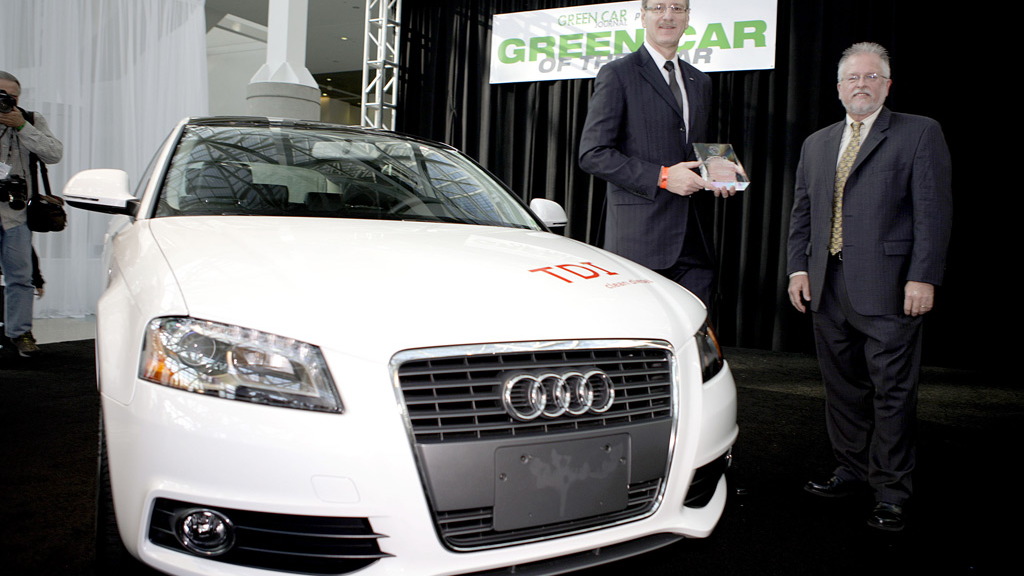
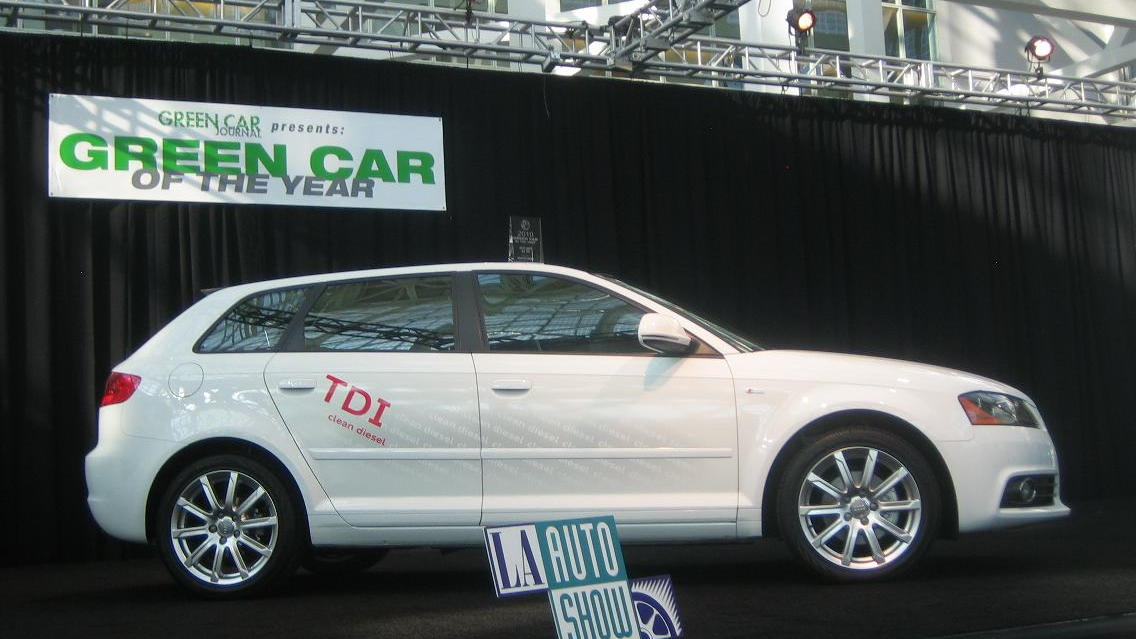
Audi, for its part, is following de Nysschen's model closely: without a hybrid in the current lineup, and only the e-Tron EV and a handful of hybrids planned for the near future, the brand's fuel efficiency efforts lie in conventional combustion engine technology, especially diesel fuel. Despite this fact, and despite issuing statements saying the brand isn't "green" centric, the recent Los Angeles Auto Show saw the A3 TDI win the 2010 Green Car of the Year award, perhaps putting proof to de Nysschen's point of view.

What do you think? Should we be focused on technologies that are currently affordable and feasible, or is it a good thing that the government is subsidizing new technology with public funds? Let us know in the comment below, or fire up your favorite word processor and write for High Gear Media.

[Detroit News]

---------------------

High Gear Media has partnered with Tesla Motors on a new writing contest where YOU can win a tour and road test of the 2010 Tesla Roadster Sport. You can submit as many articles as you like and enter multiple times. Enter now!



Follow Us


Have an opinion?Join the conversation!

  • Posting indicates you have read this site's Privacy Policy and Terms of Use
  • Notify me when there are more comments
Comments (12)
  1. Audi have got a good opinion. Driving electric or hybrid-drive cars, is NOT going to fix humanities issues.
    They consume at least at much if not more to manufacture, don't at all address the source of the energy, and have significant longevity and infrastructural issues.
    How many times do we have to go around this circle. Road cars are not killing the planet, big industry is.
    The eco-car movement is a diversion...
     
    Post Reply
    Vote
    Bad stuff?

  2. He did add that plug-in hybrids are good in concept and hold advantages over diesels in stop-and-go driving. BUT FOR THE MOMENT, de Nysschen noted, electric vehicles (EVs) are more about making a statement.
     
    Post Reply
    Vote
    Bad stuff?

  3. I happen to agree with this man from Audi. Electric and hybrid, even though I like them, are not for everyone. Audi is right; the diesel is the best idea, and it's a shame that there aren't more diesel powered cars offered for sale in the U.S. Ford offers its Fiesta with a diesel that gets 65 MPG, but they won't bring it here, for it's a diesel. That's odd; Volkswagen and Mercedes have sold their cars here with diesels for years; why can't the U.S. car makers, especially Ford and GM, offer cars with diesel here? I blame the EPA's stupid rules for diesels; they need to quit changing these, and the Sierra Club needs to leave diesels alone. I'd definitely own a car with a diesel engine if it were offered over a hybrid.
     
    Post Reply
    Vote
    Bad stuff?

  4. This is spoken like a true gas hog lover like GM of old! Audi is likely the most awesome driver car too bad it's becoming obsolete! Poetic justice!
     
    Post Reply
    Vote
    Bad stuff?

  5. This is spoken like a true gas hog lover like GM of old! Audi is likely the most awesome driver car too bad it's becoming obsolete! Poetic justice!
     
    Post Reply
    Vote
    Bad stuff?

  6. I agree, diesels are a solid proven, workable solution for our problems. EV are as good as the energy sources, a lot of people think about themselves sol green because supporting an EV, you may polluting more with the coal energy producing stations.
     
    Post Reply
    Vote
    Bad stuff?

  7. Don't any of you posting know anything about spelling, grammar, punctuation or typing in general?
    Geez!
     
    Post Reply
    Vote
    Bad stuff?

  8. EV's are expensive NOW because they are new technology built in very small quantities, and this guy has to know that, so you have to wonder at his agenda. Batteries are constantly getting better and cheaper all the time. Subsidies help build volume which will drive prices lower. This is basic stuff.
     
    Post Reply
    Vote
    Bad stuff?

  9. Antonio,
    Even powered by coal EV's are cleaner than ICE vehicles. It also takes electricity to refine gas and diesel, something you never hear about, and most of that electricity is from coal. Plus most electrical grids are less than 40% coal and many are even better than that.
     
    Post Reply
    Vote
    Bad stuff?

  10. Electric cars go back in time earlier than gasoline cars. The main reasons gas cars took over were cheap gas prices and the possibility of longer conmutes thanks to the quick development of roads and highways. The future of the short commuting belongs to electric cars, whether de Nysschen (and the like) likes it or not. I think de Nysschen is smart enough to forsee losses of market share and the money, power and the influence that come with it to electric and hybrid vehicles technologies. EV and HEV technologies are epensive now, but they for sure will be cheaper in the future; and de Nysschen knows that too.
     
    Post Reply
    Vote
    Bad stuff?

  11. I agree with De Nysschen... In the U.S. EV's are looked at as a cure-all when there is no common infrastructure to support charging of said vehicles. We do not often invest in the tech that we do have. Instead of focusing on efficiency, the government is trying to get off gas cold turkey. That is a mistake.
     
    Post Reply
    Vote
    Bad stuff?

  12. "J", According to physics, efficiency of heat engines does not relate to the amount of miles to the gallon the engine delivers, but to their abilities to convert heat energy into useful work. The most efficient of the heat engines is the Diesel with 33% efficiency or so, then there are the Otto (gasoline) engine and the Rankine (steam) engine. So, if the focus of efforts is efficiency, then hybrid technologies are a solution because they do not require heat energy to produce work i.e. electric motors. On the other hand, there seems to be no limit to improve the power delivery of a heat engine; but unfortunately, the the greater the "HP" the engine delivers, the less MPG your vehicle will make...You could cut drastically weight by using lighter alloys and/or plastics (like those used in exotic and high performance vehicles) but to improve gas mileage, but the cost of infrastructure would be higher than investing in new batteries, let alone the stress implications to the environment. I do not forsee gas prices going down in a global economy. So de Nysschen and the like should be happy about government efforts to estimulate the production of more efficient engines and not the "vice versa"
     
    Post Reply
    Vote
    Bad stuff?


Have an opinion?Join the conversation!

Connect with Facebook

Motor Authority. Now with your friends.

Discover stories your friends read.
Share stories more easily.
You control what you share.
Learn more

Research New Cars

Go!


© 2011 MotorAuthority. All Rights Reserved. MotorAuthority is published by High Gear Media. Stock photography by Homestar, LLC. Send us feedback.