
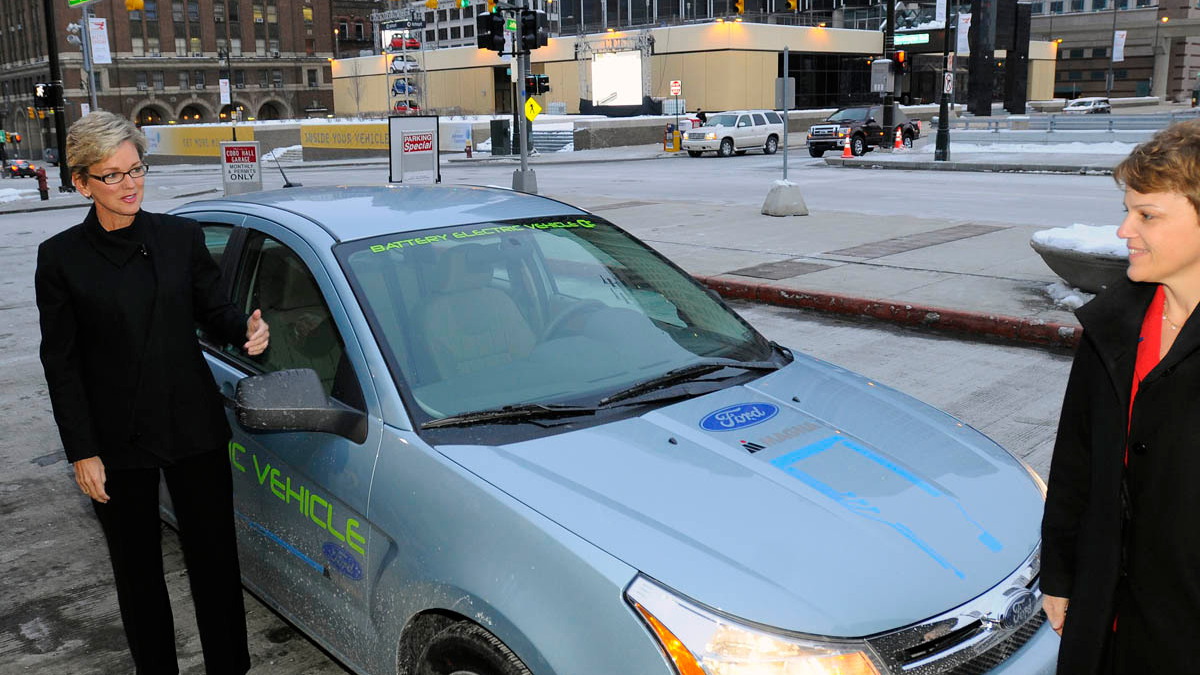
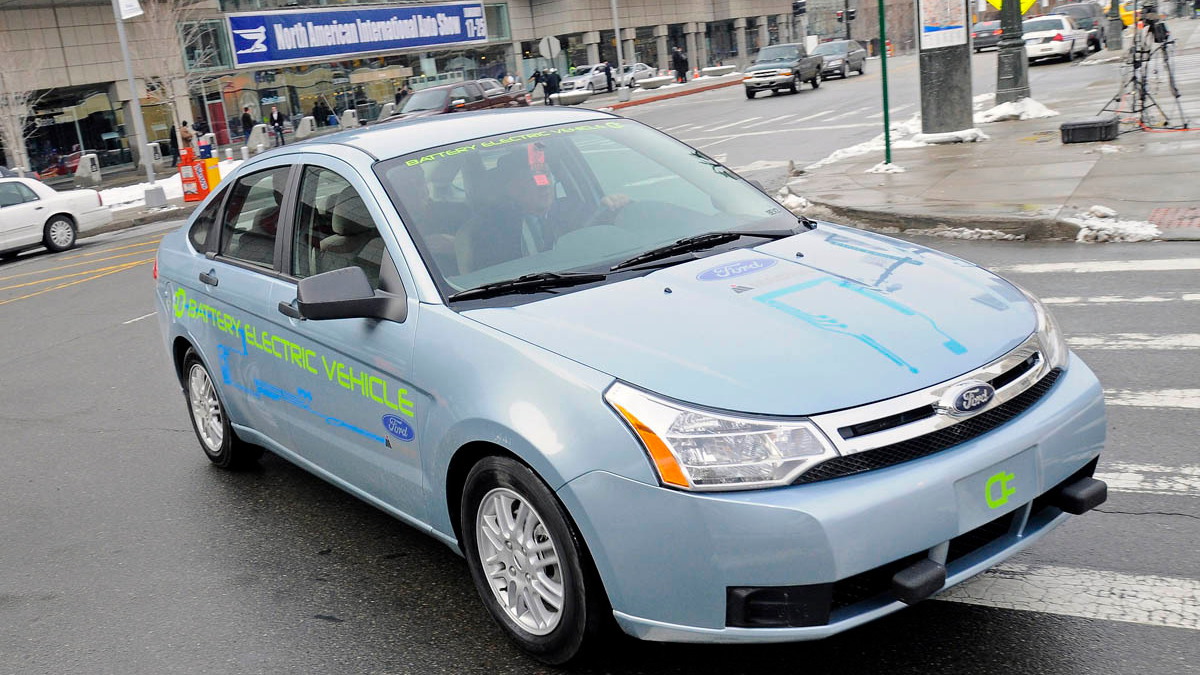
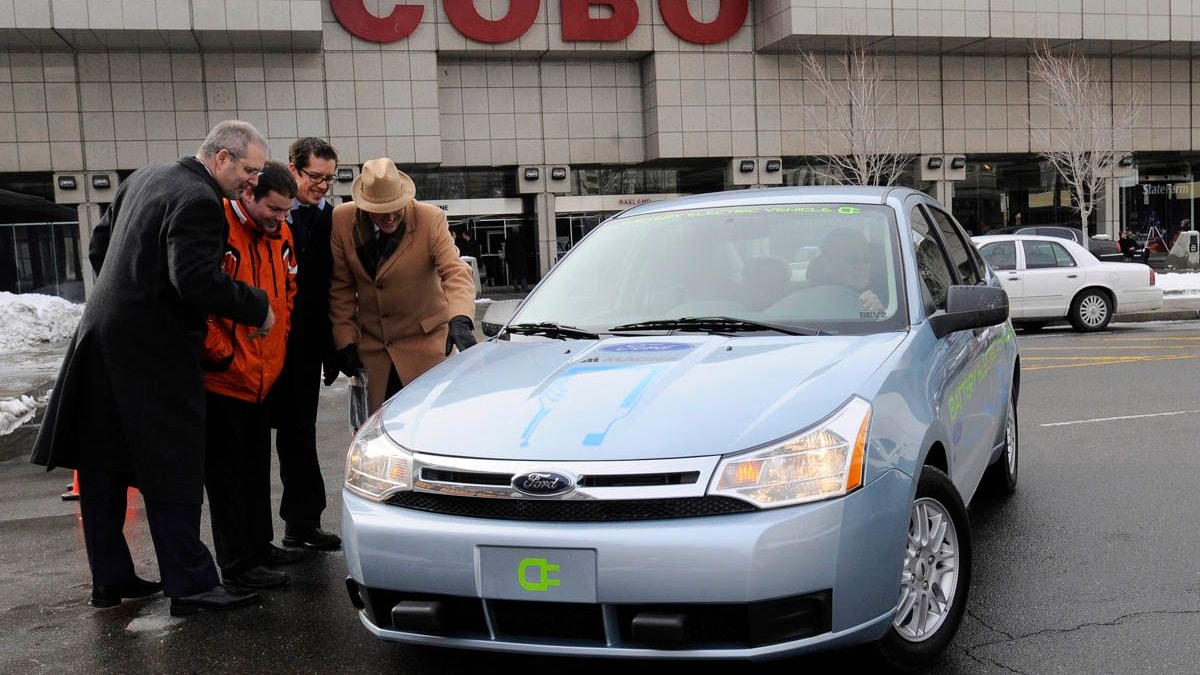
The three recipients - Ford, Nissan and Tesla - will be getting a total of about $8 billion in loans to help fund the development of advanced technology fuel-efficient vehicles. Ford will get $5.9 billion of those funds, while Nissan will get $1.6 billion and Tesla will get $465 million, reports the AP.
With those loan figures, both Ford and Nissan will be able to push ahead at full speed with their existing EV and hybrid programs, but it's Tesla that will benefit the most from the loans, despite receiving the smallest amount.
That's because the loan money will enable Tesla to meet its goals in building a new plant for the all-electric Model S Sedan, which Tesla hopes will be a volume seller and catapult the company into more mainstream status.
Check out our previous coverage for more on Tesla's plans to build the Model S or its plans for the Tesla Roadster.
Ford won't be losing out with its $5.9 billion loans, however. A recent study by the University of Michigan revealed that Detroit's carmakers could actually become more profitable by improving their average fuel efficiency. According to the study, as much as $2.9 billion in extra profit could be found if the carmakers can push their average fuel efficiency from the current 26.9mpg to the federally-mandated 35mpg by 2020, according to the Detroit Free Press.
With some help to cover the initial outlay of cash to develop the more efficient vehicles, Ford out to be able to reap the benefits of the improved profitability even while paying back its loans - if the study's conclusions hold true in the real world.
Ford is confident it will be able to make good with the government's help, however. "Ford is absolutely committed to fuel economy leadership with every new model we introduce. In fact, we plan to invest nearly $14 billion in advanced technology vehicles in the next seven years. Our partnership with the Department of Energy also will help retool our U.S. plants more quickly to produce fuel efficient vehicles and help meet the new, rigorous fuel-economy requirements," said Ford President and CEO Alan Mulally.
Nissan, too, is happy with the loan amount. "This loan is an investment in America. It will help us put high-quality, affordable zero-emissions vehicles on our roads," said Dominique Thormann, senior vice president, Administration and Finance for NNA. "This project will expand our Smyrna plant and that’s great economic news."