
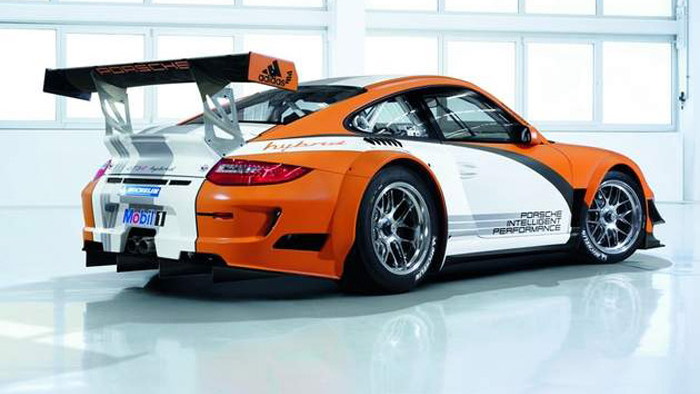
2010 Geneva Motor Show Preview: Porsche 911 GT3 R Hybrid Race Car


Porsche 911 GT3 R Hybrid

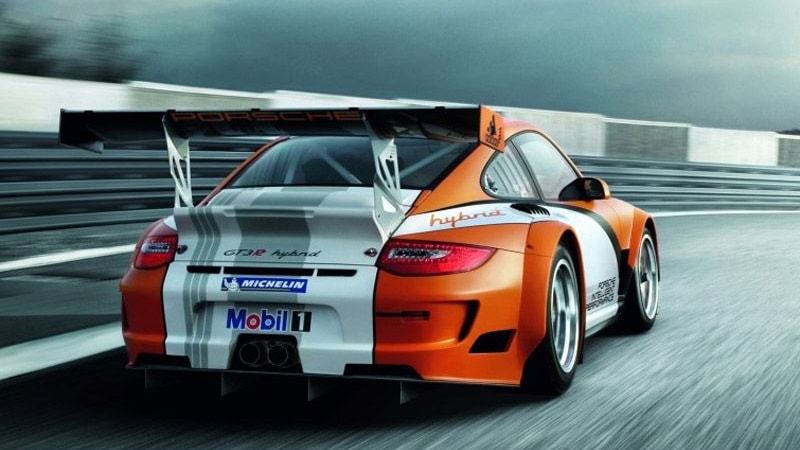
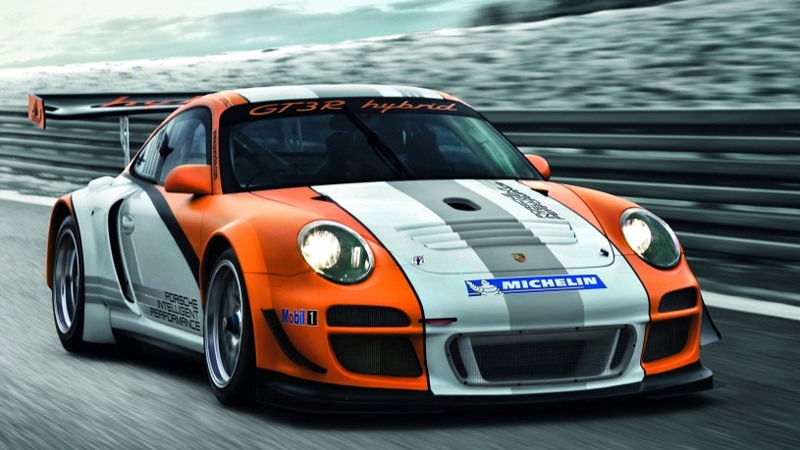
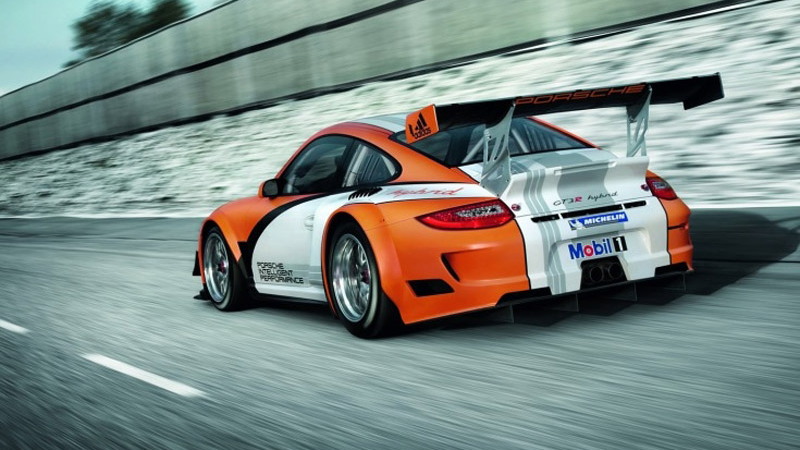
Despite not being a part of Formula 1, Porsche has leveraged similar technology to develop its own hybrid race car, due to debut next month at the 2010 Geneva Motor Show before being put to competition use in this year's Nurburgring 24 Hours endurance race on May 15.

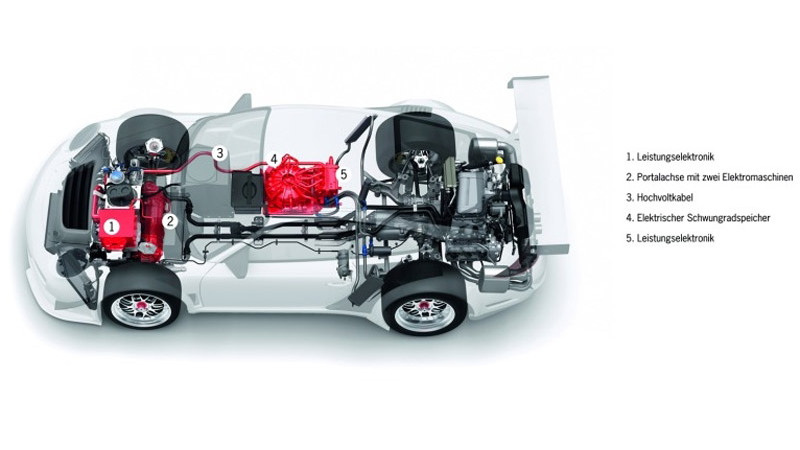
The new race car is the Porsche 911 GT3 R Hybrid and is based on the 911 GT3 RSR. Unlike conventional hybrids such as the Toyota Prius, the 911 GT3 R Hybrid uses a system similar to the F1-style Kinetic Energy Recovery System (KERS) in which an electro-mechanical flywheel is used to store kinetic energy created under braking. The flywheel, which spins at speeds of up to 40,000 rpm and is located where the front passenger normally sits, can then be tapped to release its stored kinetic energy in the form of electricity, into a pair of 80 horsepower electric motors mounted on the front axle and driving the front wheels, while the gasoline engine powers the rears.

The system works in conjunction with the car's 480 horsepower naturally-aspirated 4.0-liter flat-six engine and provides a maximum eight-second burst of propulsion to the front wheels at the push of a button, delivering the boost necessary to maximize exit speed from a corner or to pass another car.

The new 911 GT3 R Hybrid is being developed as a testbed for future technologies under the banner of "Porsche Intelligent Performance." Its advanced drivetrain may or may not make it to the production world, but racing has historically been a source of innovation in passenger cars.  There's also the chance that Porsche could return to Le Mans in 2012 under new regulations that encourage hybrid vehicles.

Porsche's Wolfgang Durheimer said last summer that an all-electric 911 might eventually be in the offing, but to become reality it will have to meet Porsche's rigorous performance standards. Spy shots of what are believed to be a hybrid 911 prototype were also caught last summer, complete with a domed protrusion on the front bonnet bearing an electricity hazard sticker, but no further word on development has come to light.


 
Follow Us


Have an opinion?Join the conversation!

  • Posting indicates you have read this site's Privacy Policy and Terms of Use
Comments (7)
  1. While flywheel energy storage is nothing new (it's often used for several applications, but one that comes to mind is for stabilizing power in certain applications... think of it sort of like a large capacitor in that regard), I think this is one of the first times I've seen it in a "regular" car. Cool stuff, but unfortuantely it may be impractical for actual, road-going vehicles. As we see here, there's definitely a space penalty to be paid.
     
    Post Reply
    Vote
    Bad stuff?

  2. I could see this being on some supercars soon. 2+2 cars could stow it behind the front seats, it's not like anyone uses those rear seats for people anyways.
     
    Post Reply
    Vote
    Bad stuff?

  3. I don't like the idea that Porsche "could return to Le Mans in 2012 under new regulations that encourage hybrid vehicles". I think that Porsche's come back to Le Mans shouldn't be depending this much on hybrid technology. It just doesn't go with porsche's racing image in my opinion.
     
    Post Reply
    Vote
    Bad stuff?

  4. I do wonder if the beauracracy of racing will see this technology banned, much as Lotus' gas-turbine, 4WD 56 was banned by USAC, or how aerodynamics (Plymouth Superbird, Torino Talledega) and nitrous were banned by NASCAR?
     
    Post Reply
    Vote
    Bad stuff?

  5. What happens in a crash? Lets not forget Chryslers car from the nineties was banned by Le Mans officials for having a fly wheel and not being able to contain it fully in the event of a very serious crash.
     
    Post Reply
    Vote
    Bad stuff?

  6. @My Wheels On Walls, that's what I was thinking. I wouldn't want some big metal disc spinning at 40,000 rpm sitting right next to me in the case of a crash!
     
    Post Reply
    Vote
    Bad stuff?

  7. There are positive sides to hybrid technologies though. Since the EPA gas mileage will improve, pit stops should decrease. Electric motors coupled to wheels will bring performance specs up few notches. Remenber that elctric motors coupled to wheels deliver insane torque and need not to be coupled to any transmission mechanism (this will reduce vehicle weight a lot). Therefore the quarter mile speed numbers (acceleration from zero to 60mph) should improve significantly. There is an available video on YouTube about the English T-Zero (concept) elctric car beating almost every known supercar in the quarter-mile...Electric cars will satisfy your need for speed better than any other gasoline (petrol) based car. Their sound will not be as exciting, though :-)
     
    Post Reply
    Vote
    Bad stuff?


Have an opinion?Join the conversation!

Research New Cars

Go!

 
© 2011 MotorAuthority. All Rights Reserved. MotorAuthority is published by High Gear Media. Stock photography by Homestar, LLC. Send us feedback.
 

Use the form below to send us a tip, give us feedback, or just say hello.

(max 750 characters)